





Transverse and longitudinal waves
Definition
A wave transfers energy from one place to another without transferring the material (matter) it travels through.
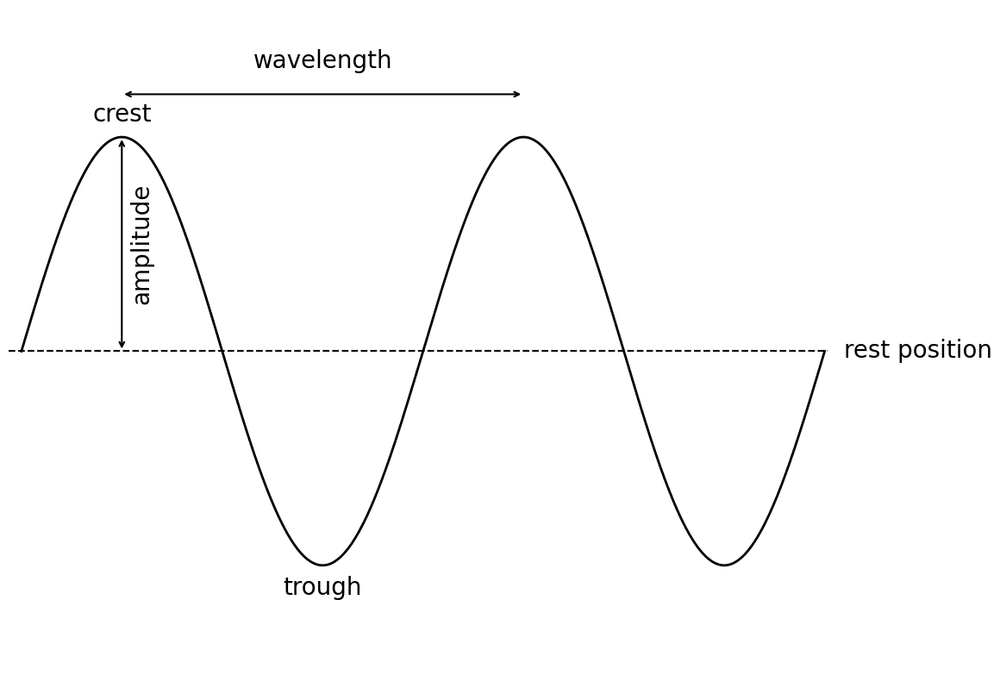
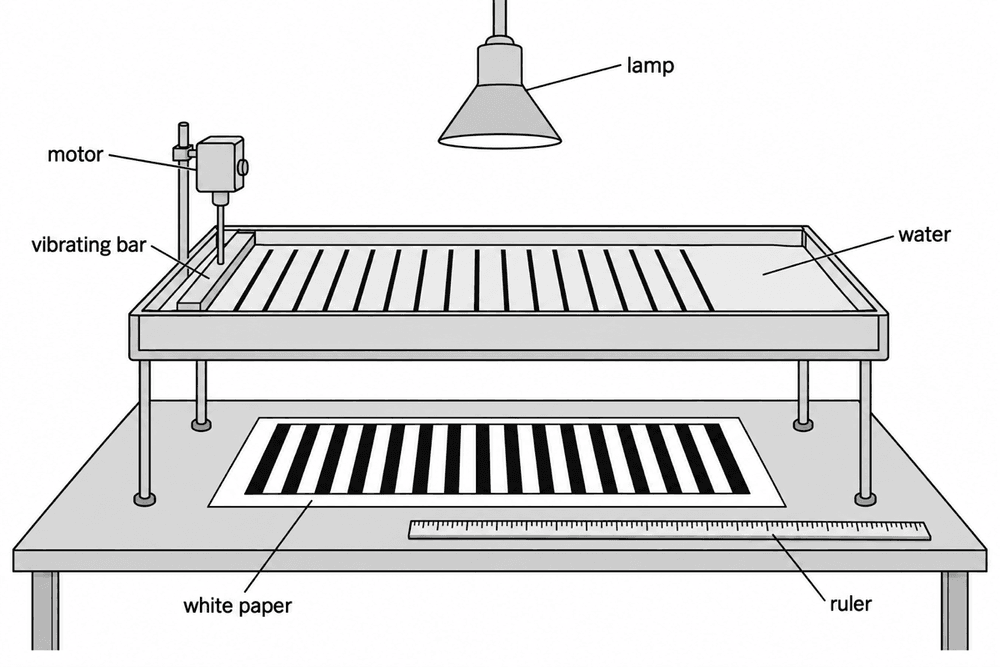
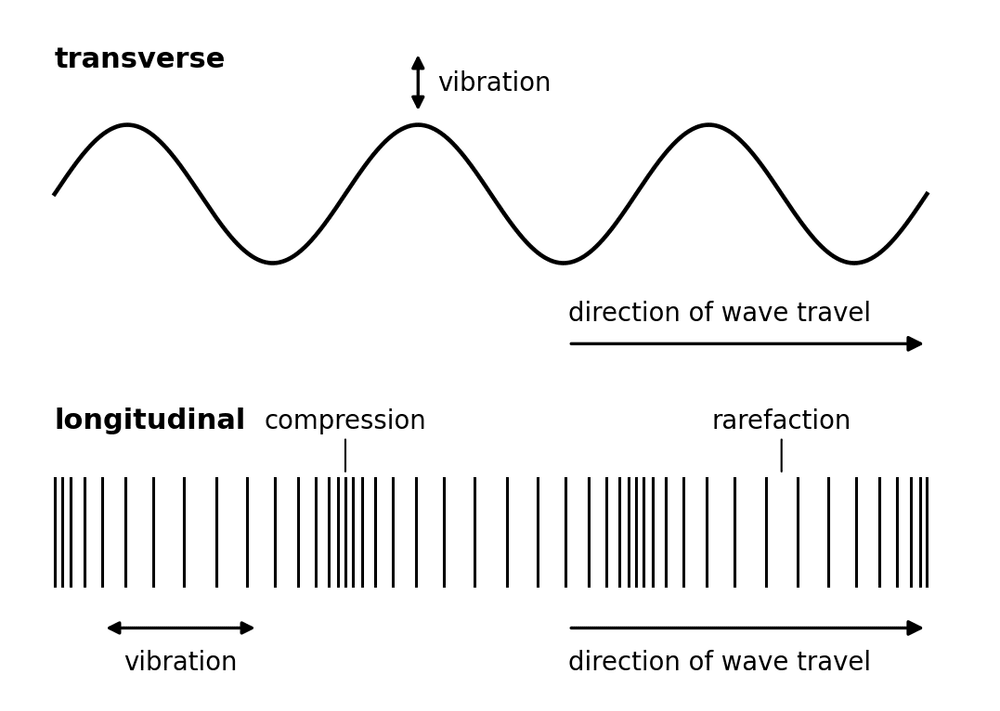
In a transverse wave, the particles of the medium oscillate (vibrate) at right angles (perpendicular) to the direction the wave travels and the energy is transferred. They have crests (peaks) and troughs.
In a longitudinal wave, the oscillations are parallel to (along) the direction the wave travels. They have compressions (where particles are closer together, causing higher pressure) and rarefactions (where particles are further apart, causing lower pressure).
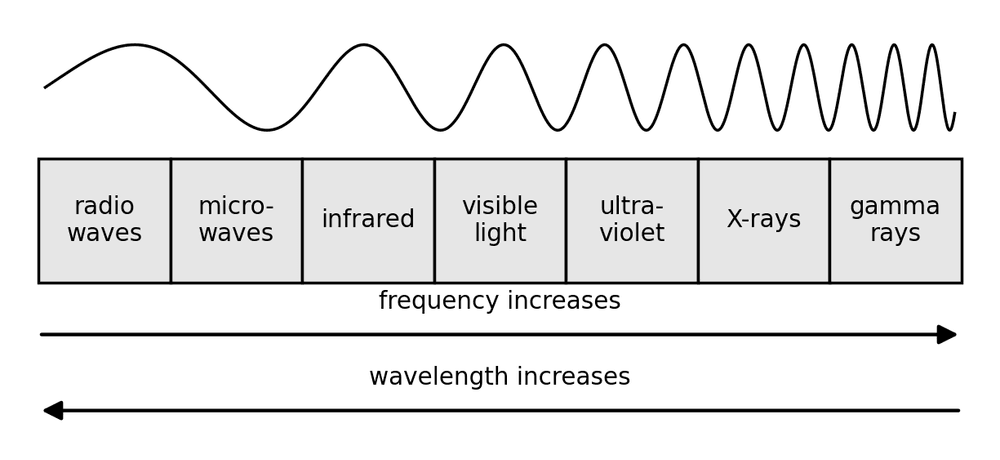
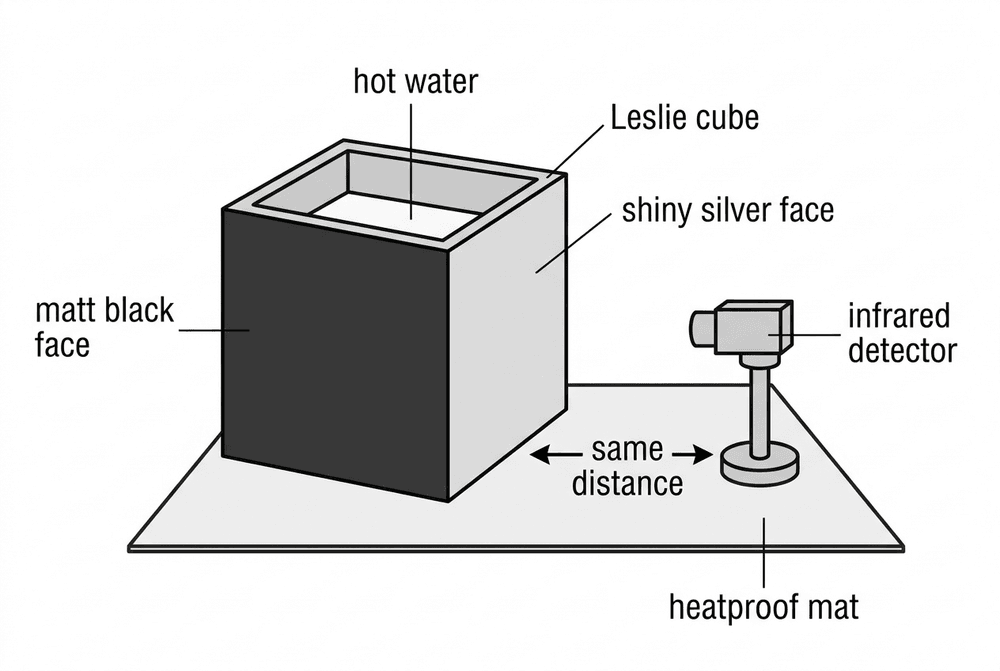
Sound needs a medium to travel through and cannot travel through a vacuum. Electromagnetic waves do not need a medium.
Diagram
Note
A transverse wave (top) oscillates perpendicularly to the direction of wave travel. A longitudinal wave (bottom) has compressions and rarefactions oscillating parallel to the direction of wave travel.
Example
Give two examples of transverse waves and one example of a longitudinal wave.
Solution
Transverse waves: ripples on the surface of water, and all electromagnetic waves (such as light or radio waves).
Longitudinal waves: sound travelling through air.
Tips/hints
Remember that the material itself does not travel with the wave. For example, a cork floating on a pond bobs up and down as ripples pass, but it does not travel along with them.
A common mistake is thinking sound is a transverse wave. Sound is longitudinal. Similarly, never describe compressions as regions where particles are spread apart.