



Photosynthesis
Definition
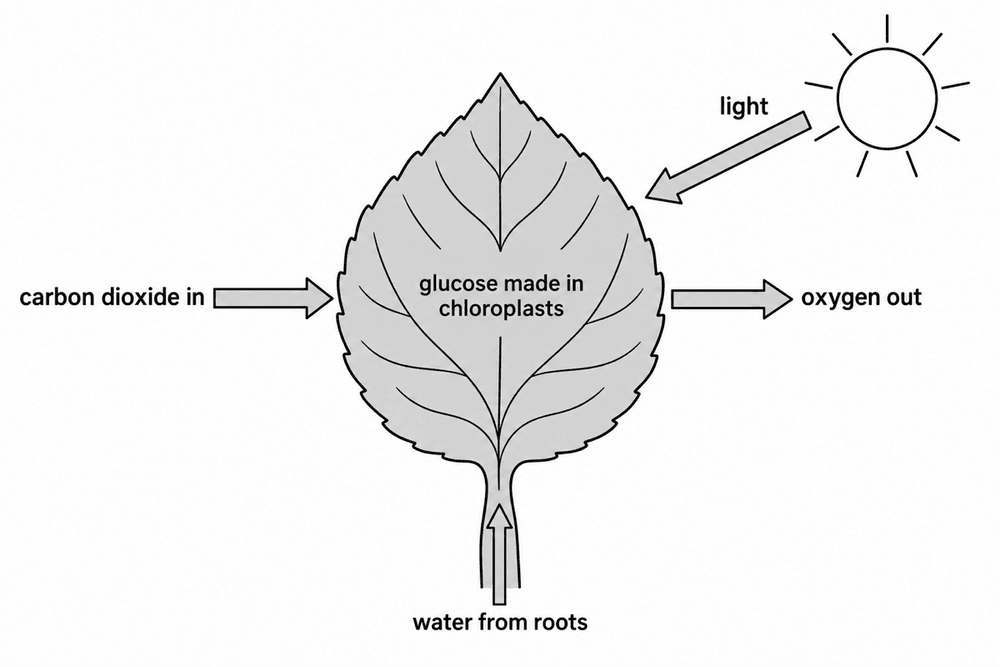
Photosynthesis is the process where plants and algae make glucose from carbon dioxide and water, releasing oxygen as a by-product. The reaction is endothermic because energy is transferred from the environment by light.
It happens in chloroplasts, which contain a green pigment called chlorophyll that absorbs the light.
Method
The word equation for photosynthesis is:
carbon dioxide + water → glucose + oxygen
Energy is transferred by light. The balanced symbol equation is:
6CO2 + 6H2O → C6H12O6 + 6O2
Carbon dioxide diffuses into the leaf through the stomata. Water is taken up by the roots and carried to the leaf in the xylem.
Uses of the glucose: respiration; storage as insoluble starch, or as fats and oils in seeds; cellulose to strengthen cell walls; and, with nitrate ions from the soil, amino acids that are built into proteins.
Diagram
Note
Light provides the energy for the reaction. Oxygen diffuses out, but some is used for respiration by the plant.
Example
A large oak tree contains several tonnes of wood, mostly cellulose. Explain where the carbon in the wood came from.
Solution
Carbon dioxide from the air diffused into the leaves through the stomata.
In the chloroplasts, photosynthesis used it (with water) to make glucose.
The tree converted glucose into cellulose to build its cell walls, so the carbon came from the air, not the soil.
Tips/hints
Plants get their food (glucose) by making it themselves, not from the soil.
Glucose is stored as insoluble starch, not as glucose, because starch is insoluble and does not affect the water balance in cells.
Nitrate ions for making proteins come from the soil, not from the air or from glucose alone.
Plants respire all the time (day and night), not just when there is no light.