





G GCSE Apps

GCSE Science

B3 Infection and response

8 subtopics in this section

Communicable diseases

Definition

A pathogen is a microorganism that causes an infectious disease. The four main types of pathogen are viruses, bacteria, protists and fungi. Pathogens can infect both plants and animals.

Communicable diseases can be passed from one host to another. In contrast, non-communicable diseases (like coronary heart disease) cannot be passed on. A host body provides the warm conditions and nutrients a pathogen needs to survive and reproduce.

Method

Pathogens make us ill in different ways. Bacteria reproduce rapidly inside the body and release toxins (poisons) that damage tissues.

Viruses are not cells. They live and reproduce inside the host's cells, causing damage when the new viruses burst out of the cell.

Spread is prevented by matching the control to the route. Airborne droplets are stopped by covering sneezes. Direct contact spread is stopped by washing hands and disinfecting surfaces. Waterborne diseases are stopped by cleaning drinking water. Vector-borne diseases are stopped by destroying the animals (vectors) that carry the pathogen.

Example

A school had 160 cases of a stomach infection in March. After introducing a hand-washing rule, they had 40 cases in April. What was the percentage decrease in cases?

Solution

First, find the decrease in cases: 160 − 40 = 120.

Then divide the decrease by the original number of cases and multiply by 100.

Percentage decrease = (120 ÷ 160) × 100 = 75%.

Tips/hints

Not all microorganisms are pathogens — many bacteria are harmless or even helpful to us.

Viruses are not a type of bacterium; they are completely different and much smaller.

Plants get communicable diseases too.

Antibiotics only kill bacteria, so they do not stop the spread of viruses or other infections.
Viral diseases

Definition

Viruses are pathogens that cause disease in plants and animals. Measles and HIV are human viral diseases, while tobacco mosaic virus (TMV) affects plants.

Method

Measles is spread by inhaling airborne droplets from coughs and sneezes. It causes a fever and a red skin rash. It can lead to fatal complications, so young children are vaccinated against it.

HIV is spread by sexual contact or the exchange of body fluids (like blood when needles are shared). It causes a flu-like illness at first, but unless controlled by antiretroviral drugs, it attacks the body's immune cells (white blood cells). If the immune system becomes too damaged to fight other infections, the patient has late-stage HIV infection (AIDS).

Tobacco mosaic virus (TMV) infects plants like tomatoes. It causes a mosaic pattern of discoloured, pale patches on the leaves.

Example

A tomato plant infected with tobacco mosaic virus produces a smaller crop of tomatoes. Explain why.

Solution

The virus causes discoloured patches on the leaves that contain less chlorophyll. With less chlorophyll, the plant absorbs less light. This reduces the rate of photosynthesis, so less glucose is produced for growth.

Tips/hints

Antibiotics only work against bacteria; they cannot kill viruses and are not used to treat measles or HIV.

Antiretroviral drugs control the spread of HIV inside the body, but they do not completely cure it.

HIV is the virus, while AIDS is the late stage of the infection when the immune system fails.

TMV does not kill the plant by poisoning it; it stunts growth by reducing photosynthesis.

Bacterial diseases

Definition

Bacterial diseases are caused by pathogenic bacteria. Two key examples are Salmonella food poisoning and gonorrhoea.

Bacteria can make you feel ill by producing toxins (poisons) that damage tissues and cells.

Method

Salmonella is spread by eating contaminated food, often when food is prepared in unhygienic conditions. Symptoms include fever, stomach cramps, vomiting and diarrhoea.

To prevent spread, poultry (chickens) are vaccinated in the UK. In the kitchen, cook food thoroughly, wash hands and surfaces, and keep raw meat away from cooked food.

Gonorrhoea is a sexually transmitted infection (STI). Symptoms include a thick yellow or green discharge from the vagina or penis and pain when urinating.

It is spread by sexual contact. Spread can be controlled by treating infections with antibiotics and using barrier methods of contraception, such as condoms.

Example

At a school fair, 80 people ate egg sandwiches made in an unhygienic kitchen and 6 of them developed Salmonella food poisoning. What percentage of the people who ate the sandwiches became ill?

Solution

Percentage = (number of cases ÷ number of people who ate the food) × 100

Percentage = (6 ÷ 80) × 100 = 7.5%

Tips/hints

Gonorrhoea was once easily treated with penicillin, but many strains of the bacteria are now resistant to it.

Remember that antibiotics kill bacteria but have no effect on viruses.

Freezing food does not kill bacteria; it only stops them multiplying. Contraceptive pills do not protect against STIs like gonorrhoea; only barrier methods do.

Fungal and protist diseases

Definition

Rose black spot is a fungal disease that affects rose plants. It causes purple or black spots to appear on the leaves, which often turn yellow and fall off early. With fewer healthy leaves, there is less photosynthesis, so the plant grows less. The fungus spores spread in the environment by water (rain splash) and wind.

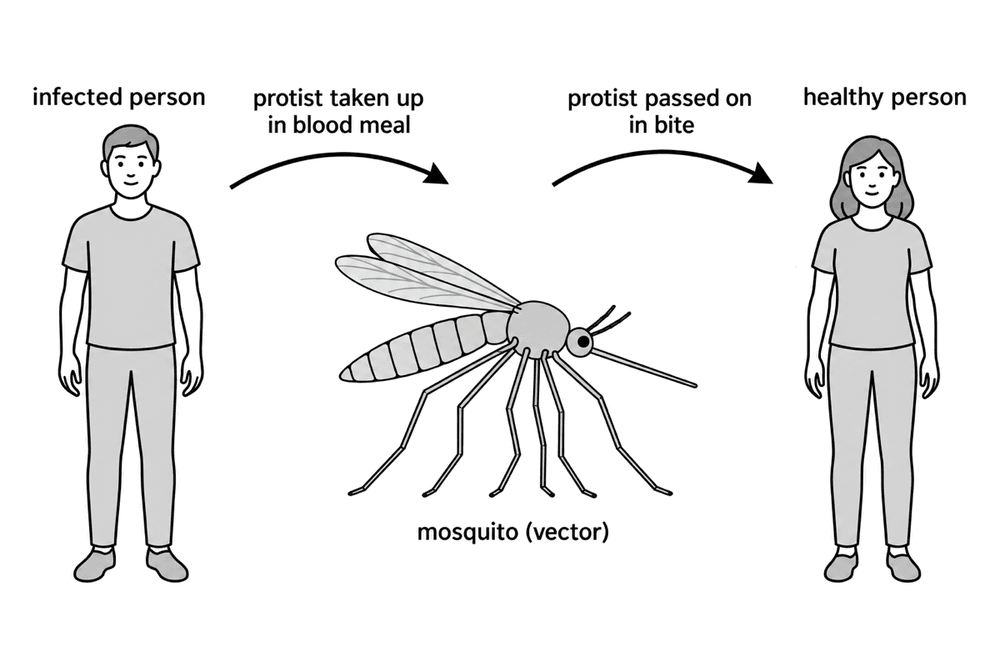
Malaria is caused by a protist (a single-celled eukaryotic organism). It causes repeated episodes of fever and can be fatal. The protist is passed on by a female mosquito, which acts as a vector.

Method

Treating rose black spot: The disease is treated by spraying the plant with fungicides and by removing and destroying (burning) the infected leaves so the fungus cannot spread.

Controlling malaria: The spread of malaria is controlled by preventing mosquitoes from breeding (by draining standing water where they lay eggs) and by using insecticide-treated mosquito nets to avoid bites while sleeping.

Diagram

bio malaria mosquito vector

Note

A mosquito acts as a vector for malaria. It takes up the protist when it feeds on an infected person, and passes it on when it bites a healthy person.

Example

In a town, the number of malaria cases fell from 400 to 140 in the year after standing water was drained. What was the percentage decrease in cases?

Solution

Decrease = 400 − 140 = 260 cases.

Percentage decrease = (decrease ÷ original number) × 100 = (260 ÷ 400) × 100 = 65%.

Tips/hints

Malaria is caused by a protist, not a bacterium or a virus. The mosquito is not the pathogen itself, but the vector.

Rose black spot is a fungal disease, so it cannot be treated with antibiotics.

Infected rose leaves must be destroyed, not composted, as fungus spores can survive and spread.

Human defence systems

Definition

Non-specific defences work against any pathogen and stop pathogens entering the body. If a pathogen does get in, the immune system tries to destroy it: white blood cells defend the body by phagocytosis, by producing antibodies and by producing antitoxins.

Method

The body has non-specific defences:

Skin: acts as a physical barrier and secretes antimicrobial substances. Healthy bacteria on the skin compete with pathogens, and scabs seal cuts.

Nose: contains hairs and mucus to trap particles.

Trachea and bronchi: produce mucus to trap pathogens. Cells lining them have cilia (tiny hairs) that beat to sweep mucus to the throat.

Stomach: produces hydrochloric acid which kills most swallowed pathogens.

White blood cells defend us in three ways:

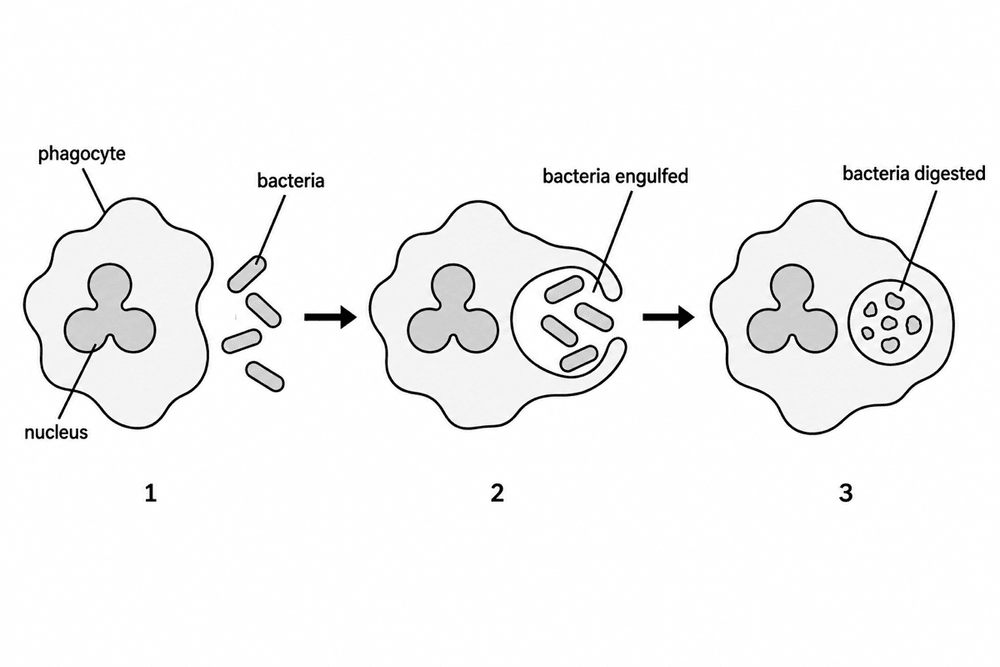
1. Phagocytosis: a white blood cell (phagocyte) surrounds, engulfs and digests the pathogen.

2. Producing antibodies: lymphocytes make antibodies specific to the antigens on a pathogen. They bind to the pathogen and help destroy it.

3. Producing antitoxins: these neutralise the harmful toxins released by bacteria.

Diagram

bio phagocytosis stages

Note

1: a phagocyte moves towards the bacteria. 2: it surrounds and engulfs them. 3: the bacteria are digested inside the phagocyte.

Example

A person eats food containing a few harmful bacteria. Describe how the body defends itself against these bacteria.

Solution

Hydrochloric acid in the stomach kills most of the bacteria.

Any bacteria that get into the body are engulfed and digested by phagocytes. Other white blood cells make antibodies that bind to the bacteria, and antitoxins that neutralise the toxins the bacteria release.

Tips/hints

Antibodies bind to pathogens (they do not kill toxins); antitoxins neutralise toxins.

Stomach acid kills pathogens because it is acidic, not because it digests them with enzymes.

Mucus traps pathogens (it does not kill them), and cilia move the mucus (they do not trap pathogens).

Vaccination

Definition

A vaccine contains small amounts of a dead or inactive pathogen. It is usually injected, though some are taken by mouth or nasal spray.

Vaccination protects against a specific pathogen. If enough people are vaccinated, it protects the whole population through herd immunity.

Method

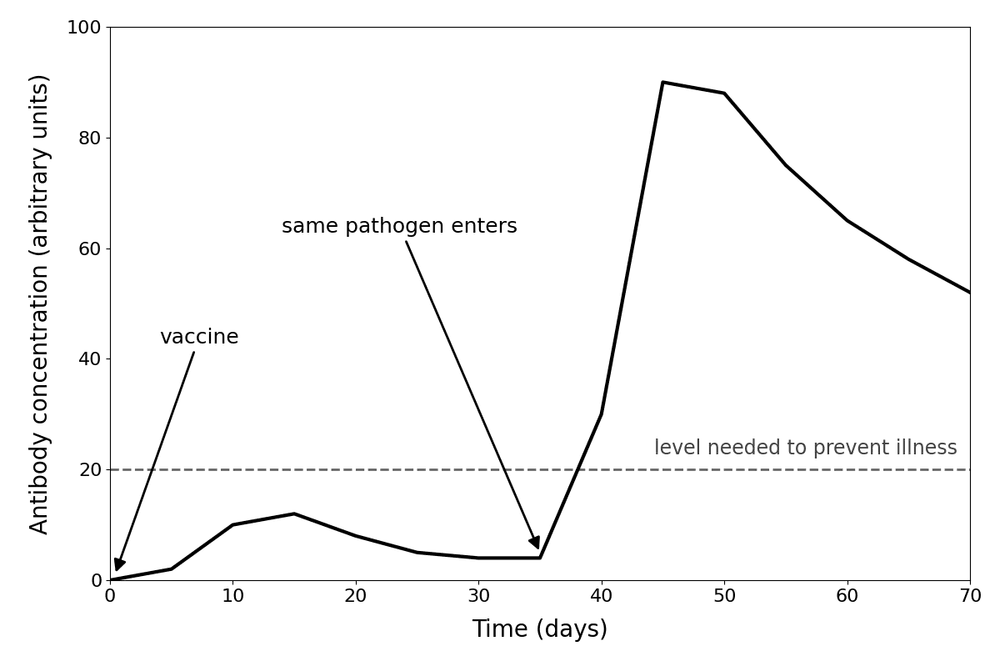
A vaccine stimulates white blood cells to produce antibodies against the pathogen's antigens. Because the pathogen is dead or inactive, it does not cause illness.

The body "remembers" the antigens using memory cells. If the active pathogen enters later, white blood cells respond much faster, making far more of the correct antibodies. This destroys the pathogen before it causes disease.

Diagram

bio vaccination antibody graph

Note

After the vaccine, antibodies are made slowly and in small amounts. When the same pathogen enters, the response is faster and much larger, and the antibody concentration passes the level needed to prevent illness, so the pathogen is destroyed before it causes illness.

Example

A population of 8500 people lives in a town. 7140 of them receive a vaccine. Calculate the percentage vaccinated. Why does this protect the unvaccinated 1360 people?

Solution

Percentage vaccinated = (7140 ÷ 8500) × 100 = 84%

This helps through herd immunity. With most people immune, the virus has very few people to spread to, so the spread is greatly reduced.

Tips/hints

Vaccines contain dead or inactive pathogens, not antibodies or antibiotics.

A vaccine only works against the specific pathogen it was made from.

Flu vaccines need updating because the pathogen changes, meaning old antibodies no longer match.

Global vaccination benefits include preventing deaths and reducing epidemics, but issues include rare side effects and storage difficulties.

Antibiotics and painkillers

Definition

Antibiotics (such as penicillin) are medicines that help to cure bacterial diseases by killing the infective bacteria inside the body. Particular bacteria need particular antibiotics, so a doctor chooses one that works on the bacterium causing the infection.

Painkillers (such as paracetamol) and other medicines, such as cough mixtures and decongestants, treat the symptoms of a disease. They do not kill pathogens.

Method

Antibiotics cannot kill viruses. Viruses live and reproduce inside the body's own cells, so it is hard to make a drug that destroys a virus without also damaging the body's cells and tissues.

Since antibiotics came into use in the 1940s, deaths from bacterial infections have fallen sharply. However, strains of bacteria that are resistant to antibiotics have appeared: the antibiotic no longer kills them, so the infection is much harder to treat.

Example

A patient has a bacterial ear infection with earache. A second patient has a cold with a high temperature. Suggest a treatment for each and explain your choice.

Solution

Ear infection: an antibiotic that works on that bacterium kills the bacteria and cures the infection; a painkiller can ease the earache meanwhile.

Cold: it is caused by a virus, so an antibiotic would not work. A painkiller such as paracetamol lowers the temperature and eases aches, while the immune system destroys the virus.

Tips/hints

Antibiotics kill bacteria, not viruses.

Feeling better after a painkiller does not mean the pathogen has gone: the immune system still has to destroy it.

It is the bacteria that become resistant to an antibiotic, not the person's body.

Discovery and development of drugs

Definition

Traditionally, drugs were extracted from plants and microorganisms. For example, the heart drug digitalis comes from foxgloves, the painkiller aspirin comes from willow, and penicillin was discovered by Alexander Fleming from the Penicillium mould.

Today, most new drugs are synthesised by chemists in the pharmaceutical industry, although the starting chemical might still come from a plant.

Method

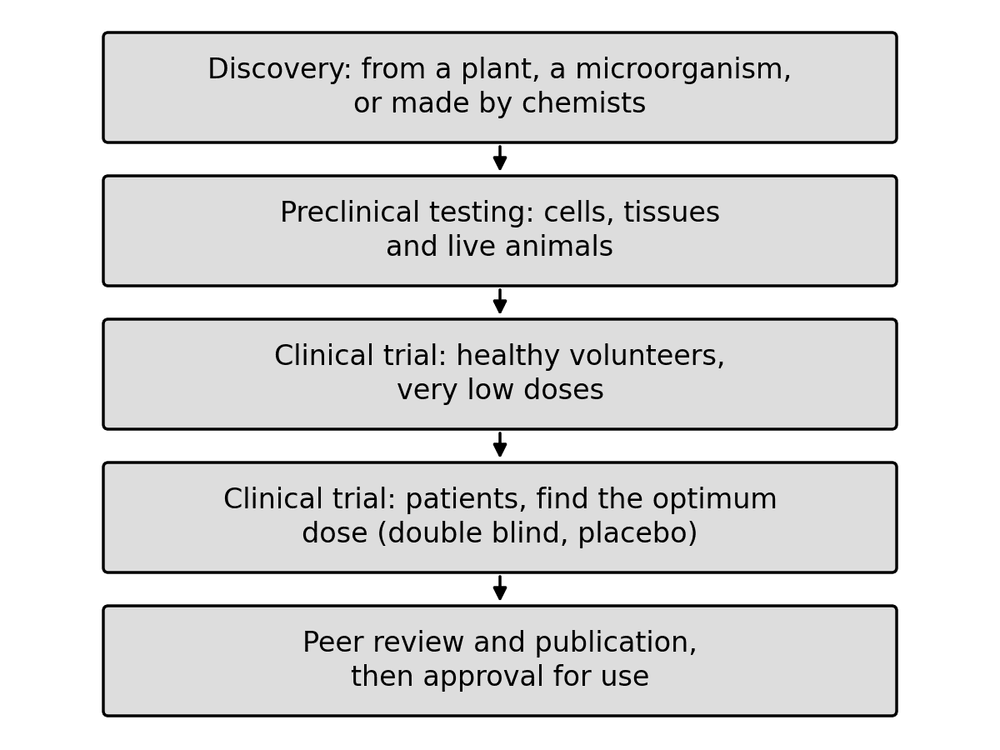
New drugs must be tested to check they are safe and effective. They are tested for:

• Toxicity: is it harmful?

• Efficacy: does it work?

• Dose: how much to give?

Diagram

bio drug development stages

Note

The stages of testing a new drug. Clinical trials use a placebo (a dummy treatment) as a control. In a double blind trial, neither the patients nor the doctors know who is given the placebo.

Example

In a double blind trial of a new painkiller, 30 of 50 patients given the drug reported less pain, and 12 of 50 patients given a placebo also reported less pain. What do the results show?

Solution

Drug group: (30 ÷ 50) × 100 = 60% improved. Placebo group: (12 ÷ 50) × 100 = 24% improved.

Some patients improve on the placebo just because they expect to, so the drug's real effect is the difference: 60 − 24 = 36 percentage points. The drug works better than the placebo.

Tips/hints

A placebo does not contain a small dose of the drug; it is a dummy treatment with no active drug.

Preclinical animal testing checks for toxicity, but it does not prove a drug is completely safe for humans.

Double blind trials are used so that the expectations of the patients and doctors cannot bias the results.

Peer review means independent scientists check the results before publication so they can be trusted and claims are not exaggerated.

Test yourself on this topic

Try the free quiz with worked solutions.

Start quiz →

Get GCSE Science

Full notes, full question bank, offline.