


Density
Definition
Density tells you how much mass is packed into each unit of volume.
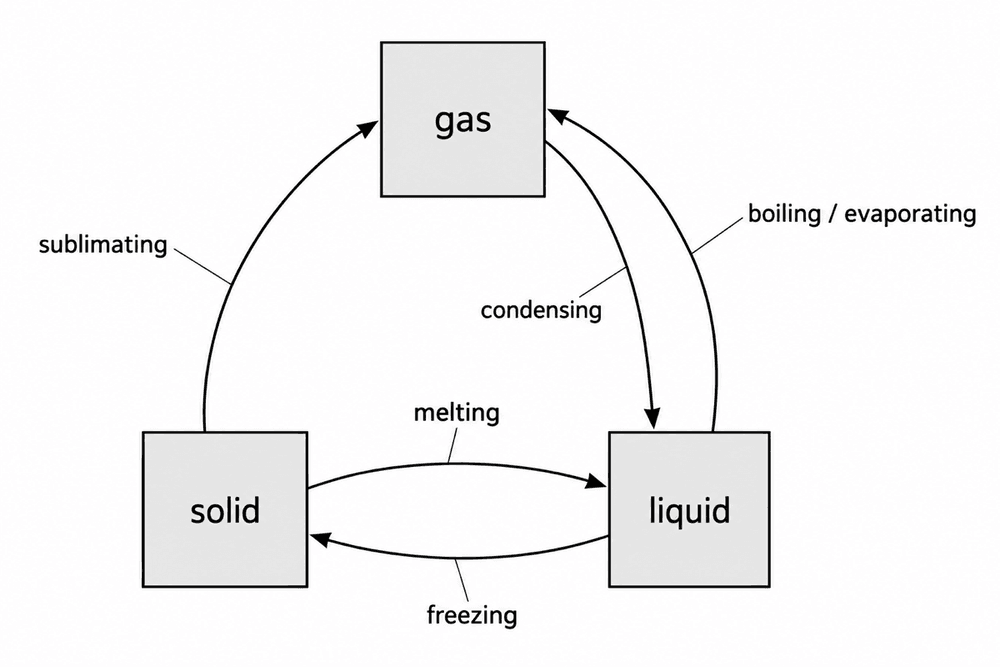
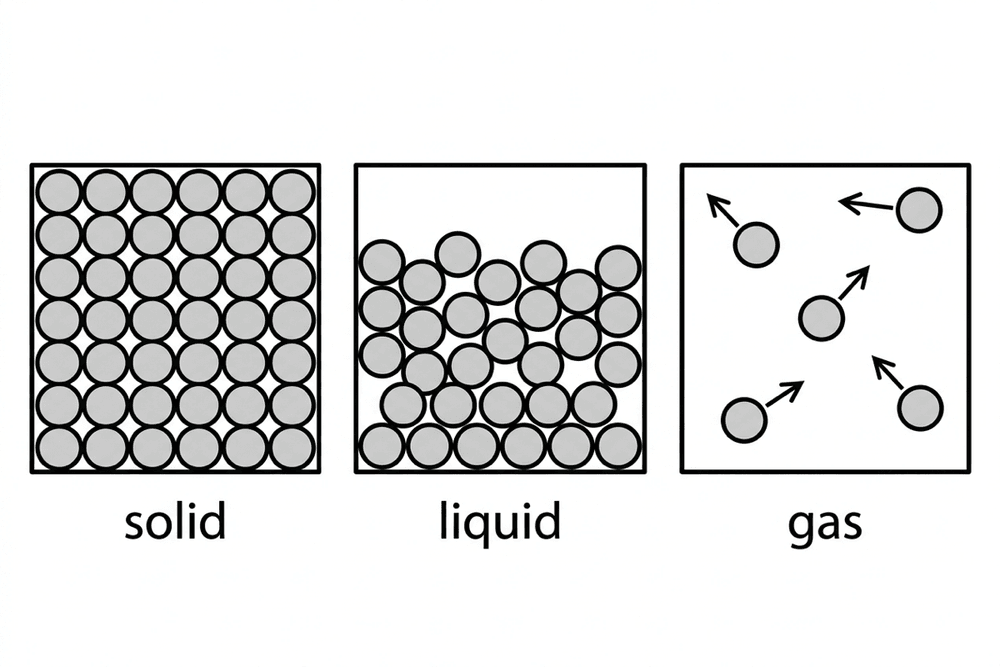
The particle model explains why different states of matter have different densities. In a solid, particles are closely packed in a regular pattern, and in a liquid they are still touching but randomly arranged. Because the particles are close together, solids and liquids have similar and high densities.
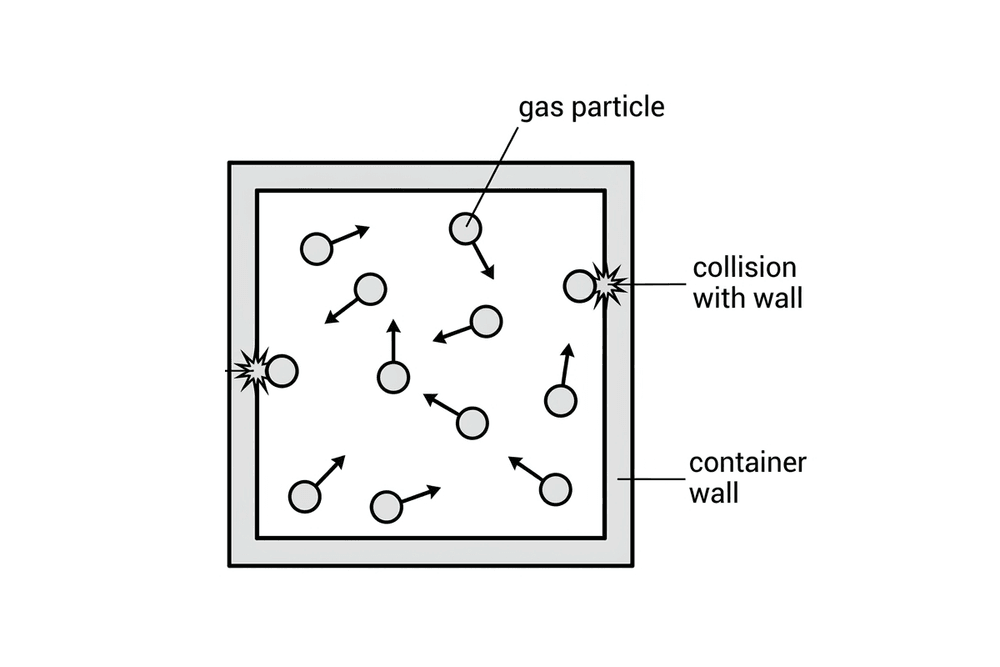
In a gas, the same particles are spread much further apart and move randomly in all directions. Because the same mass fills a far larger volume, the density of a gas is much lower (often about 1000 times lower).
Method
Density: ρ = m ÷ V, so density = mass ÷ volume.
Density (ρ) is usually measured in kg/m3, which requires mass in kg and volume in m3.
If you are given mass in g and volume in cm3, the density will be in g/cm3. To convert from g/cm3 to kg/m3, multiply by 1000.
Diagram
Note
In the solid and the liquid the particles are touching, so a lot of mass fits into each cubic metre. In the gas the particles are far apart and moving in random directions, so the same space holds much less mass.
Example
A 2.5 kg block of metal has a volume of 0.00080 m3. What is its density?
Solution
Use ρ = m ÷ V
ρ = 2.5 ÷ 0.00080 = 3125 kg/m3
Tips/hints
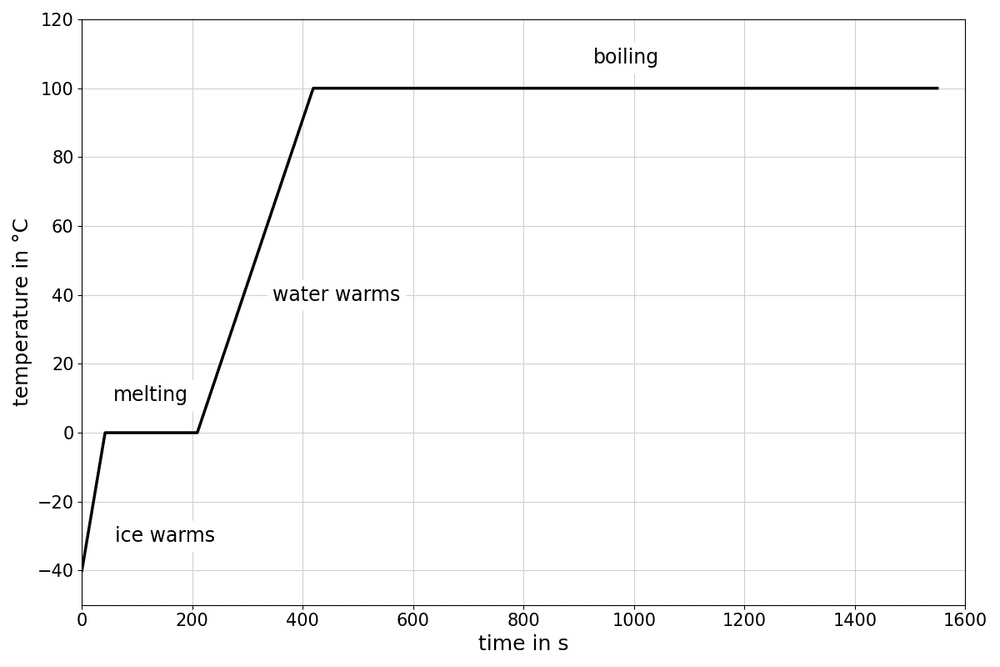
Mass is conserved when a substance changes state (melts or boils). The volume changes, which means the density changes, but the mass stays exactly the same.
Heavier objects do not always have a higher density. Density depends on both mass and volume.
When a substance expands (like a gas being heated), its particles do not get bigger; they just spread further apart. This increases the volume and decreases the density.