





Crude oil, hydrocarbons and alkanes
Definition
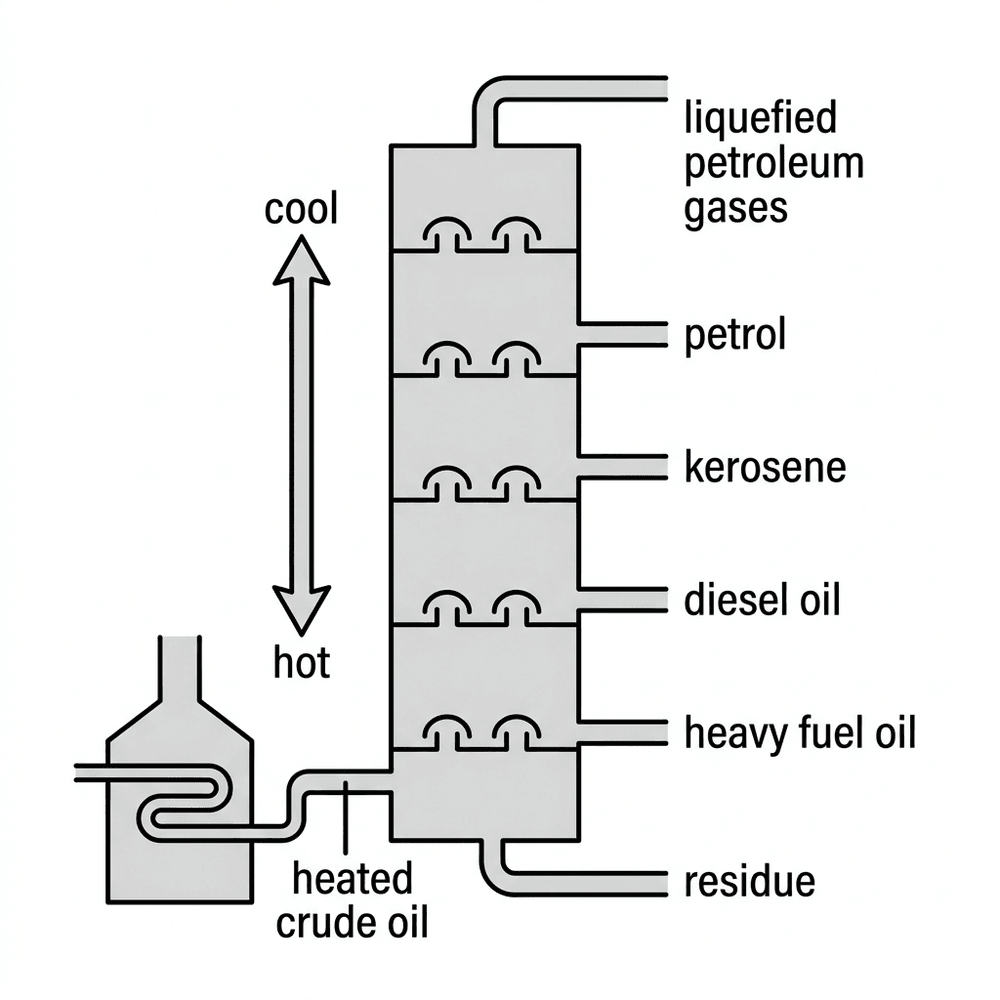
Crude oil is a finite (non-renewable) resource found in rocks. It was formed over millions of years from the remains of ancient biomass, mainly tiny sea organisms called plankton, that were buried in mud and compressed.
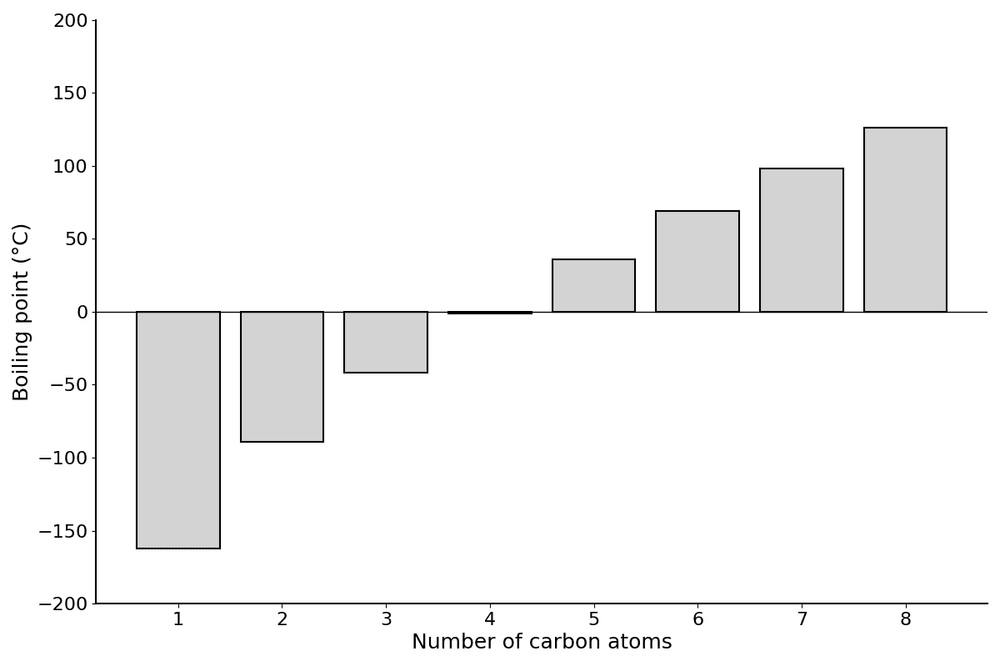
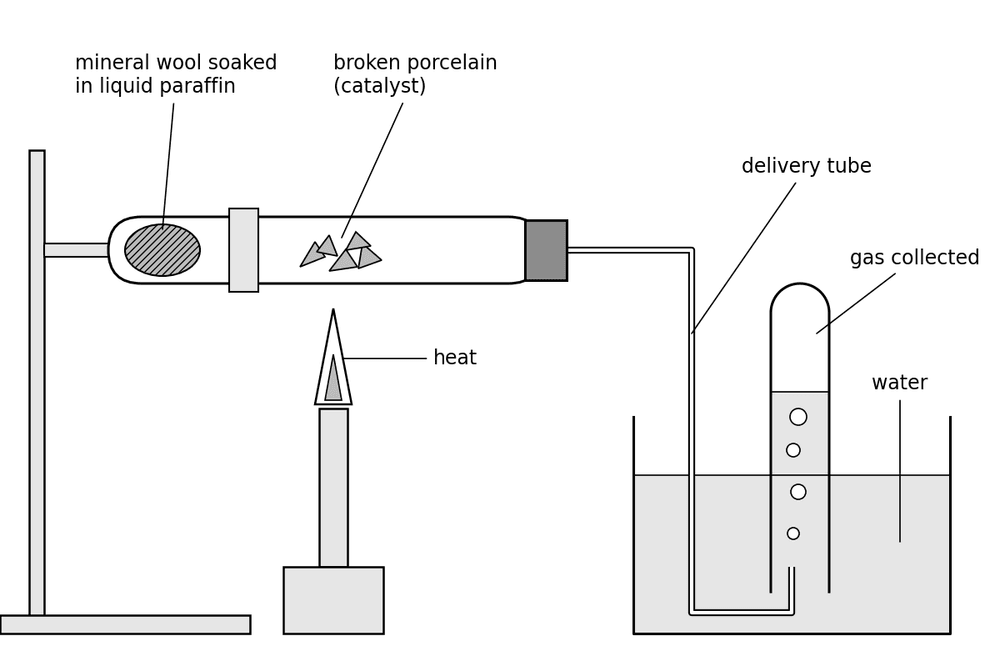
It is a mixture of a very large number of compounds that are not chemically joined together. Most of these compounds are hydrocarbons: molecules that contain ONLY carbon and hydrogen atoms.
Most of the hydrocarbons in crude oil are alkanes. Alkanes are a homologous series (a family of compounds) with the general formula CnH2n+2.
Method
To find the formula of an alkane, use CnH2n+2. This means you multiply the number of carbon atoms by 2 and then add 2 to find the number of hydrogen atoms.
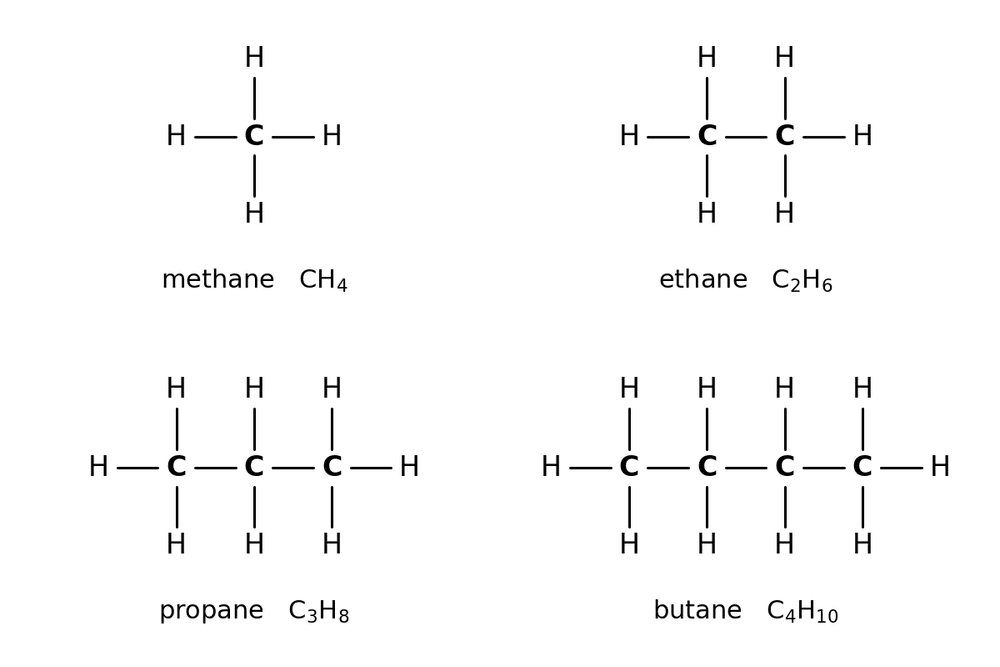
The first four alkanes are methane (CH4), ethane (C2H6), propane (C3H8) and butane (C4H10).
Diagram
Note
The displayed formulae of methane (CH4), ethane (C2H6), propane (C3H8) and butane (C4H10).
Example
An alkane contains 7 carbon atoms. How many hydrogen atoms does it have in its molecular formula?
Solution
Use the general formula CnH2n+2 where n = 7.
Hydrogen atoms = (2 × 7) + 2 = 14 + 2 = 16.
The molecular formula is C7H16.
Tips/hints
A hydrocarbon must contain carbon and hydrogen only. If it has oxygen in it, it is not a hydrocarbon.
Crude oil was not formed from dinosaurs, and it is not a single compound.
When applying the general formula CnH2n+2, always remember the '+ 2' at the end. Don't confuse it with other general formulae.
In a displayed formula, every carbon atom must have exactly 4 single bonds, and every hydrogen atom must have 1.