


Metal oxides and the reactivity series
Definition
Metals react with oxygen to form metal oxides, such as when magnesium burns to form white magnesium oxide. These are oxidation reactions because the metal gains oxygen. Reduction is the loss of oxygen.
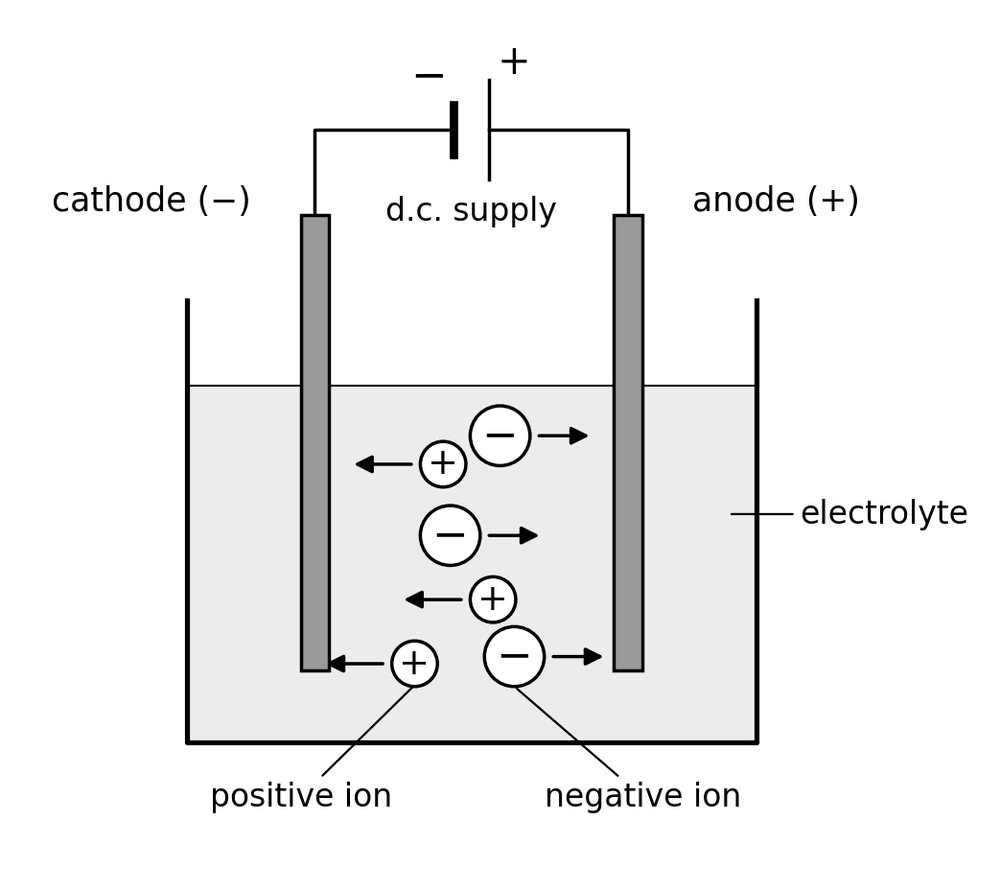
When metals react, they form positive ions. The more easily a metal forms its positive ion, the more reactive it is.
Diagram
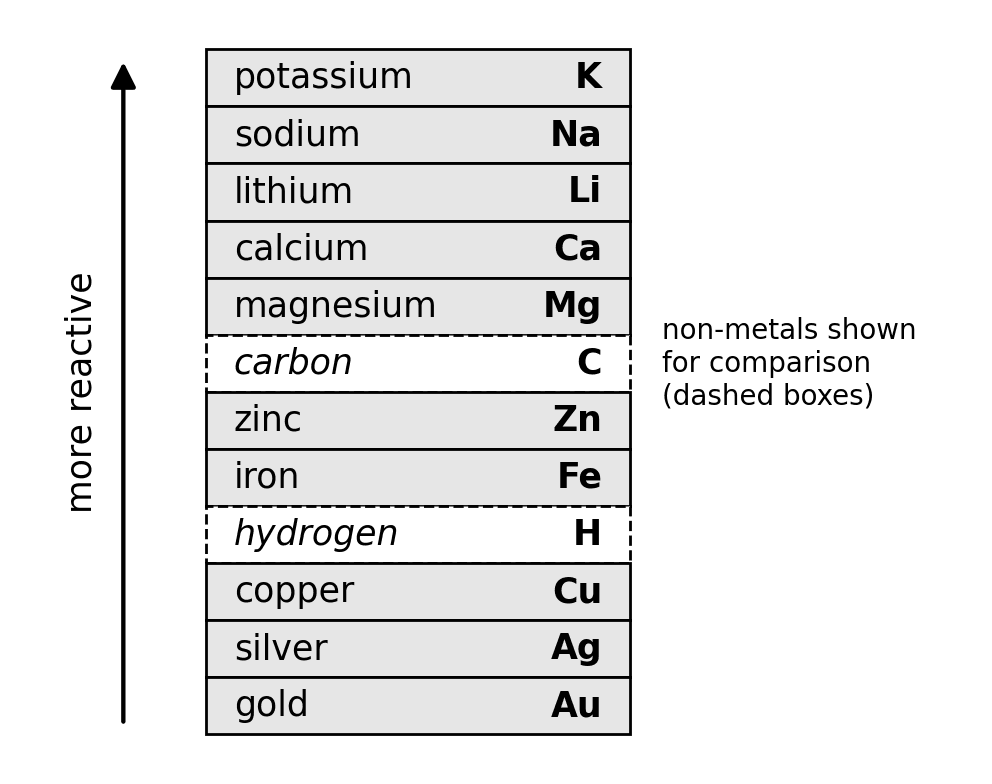
Note
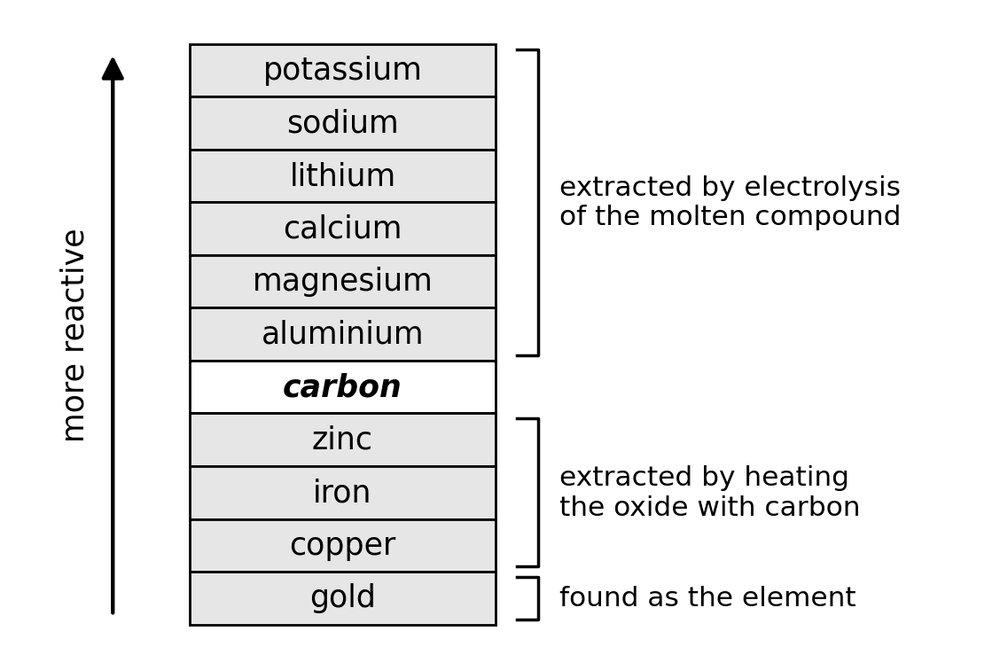
The reactivity series of metals, with carbon and hydrogen included for comparison. A metal higher in the series forms positive ions more easily, so it reacts more vigorously and can displace any metal below it.
Method
You can deduce the order of reactivity by observing reactions.
With water: Potassium, sodium and lithium react violently with cold water. Calcium reacts steadily; magnesium reacts very slowly. Zinc, iron and copper do not react.
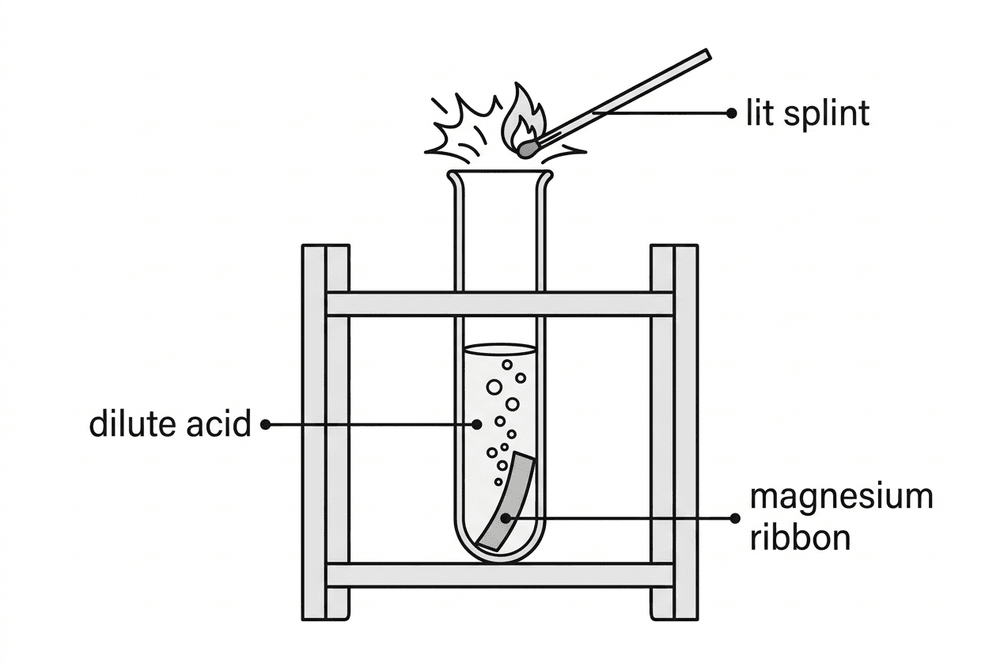
With dilute acid: Magnesium fizzes fast, zinc and iron bubble more slowly, and copper has no reaction.
Displacement: A more reactive metal displaces a less reactive metal from its compound.
Example
A student leaves an iron nail in silver nitrate solution. Will a reaction happen, and what forms?
Solution
Iron is above silver in the reactivity series, so iron is more reactive.
Iron displaces silver from its compound: iron + silver nitrate → iron(II) nitrate + silver.
Crystals of silver form on the nail. If a silver wire were put in iron(II) nitrate solution instead, nothing would happen.
Tips/hints
More reactive metals are higher in the series. Only a more reactive metal can displace a less reactive one.
Carbon sits between magnesium and zinc; hydrogen sits between iron and copper.
Reactivity depends on the metal's ability to form positive ions, not on the size of the piece used.