



Sexual and asexual reproduction
Definition
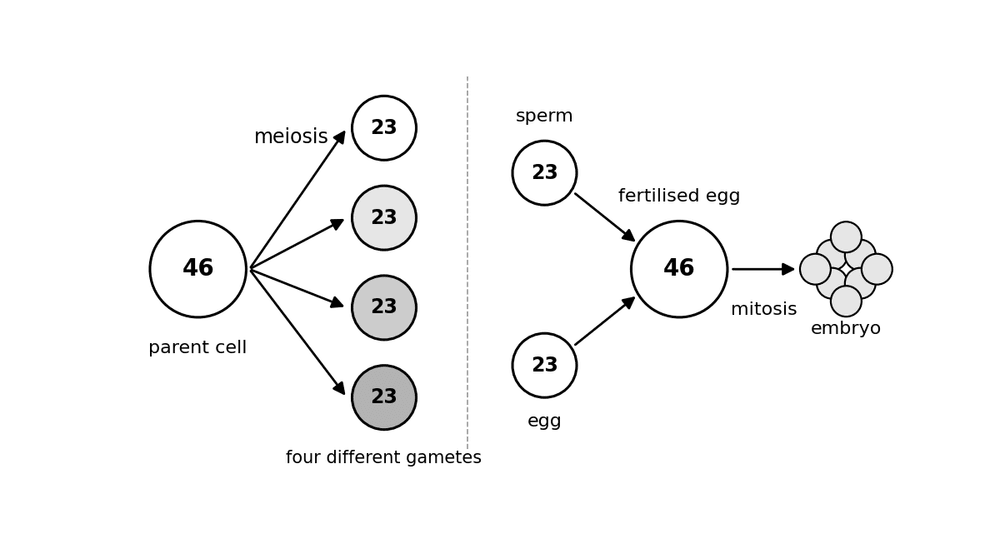
Reproduction can be sexual or asexual. Sexual reproduction involves two parents and the fusion of male and female gametes during fertilisation. This mixes genetic information from both parents, so the offspring show variation.
Asexual reproduction involves only one parent. There are no gametes and no fusion of cells, so there is no mixing of genetic information. The offspring are genetically identical to the parent and to each other. These identical offspring are called clones.
Method
Gametes are produced by a type of cell division called meiosis, which makes genetically different cells. In animals, the gametes are sperm and egg cells. In flowering plants, the gametes are pollen and egg cells.
Asexual reproduction relies on a different type of cell division called mitosis, which produces genetically identical cells. Examples of asexual reproduction include daffodil bulbs, potato tubers, spider-plant plantlets, and a single-celled organism dividing into two.
Example
A gardener takes a cutting from a prize-winning plant and grows a new plant from it. Will the new plant have the same flower colour as the parent?
Solution
Yes. Growing a plant from a cutting is a form of asexual reproduction.
Because only one parent is involved and the cells divide by mitosis, there is no mixing of genetic information. The new plant is a clone, so it will have the exact same alleles for flower colour as the parent plant.
Tips/hints
A common mistake is thinking pollen is a plant's seed. Pollen is the male gamete, while the seed develops later from the fertilised egg.
Remember that plants can reproduce both sexually (using flowers to make seeds) and asexually (using structures like bulbs or tubers).
Sexual reproduction gives variety in the offspring; asexual reproduction gives clones with no variety, so one change (such as a new disease) can affect them all.