

Collecting data (F)
Definition
The way Data is Collected depends on the type of Data it is.
Observation
Used to record behaviour, events or physical characteristics. Example: To find out how often rush hour trains run late.
Survey
Used to find out information that can't be accessed in existing databases Example: To find out the favourite TV programme of your classmates
Experiment
Used to test something for which the outcome can't be predicted. Example: To find out if a dice is biased towards a particular number
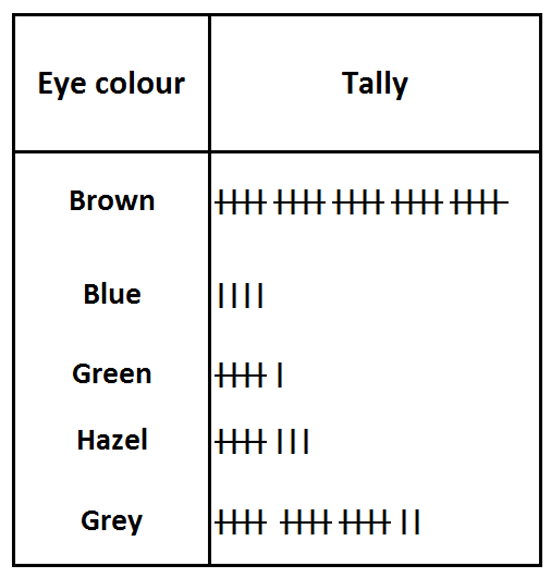
When gathering data, you need to record it accurately. A tally chart is a good way of doing this. Here, the eye-colour of a population has been observed.
Diagram
Note
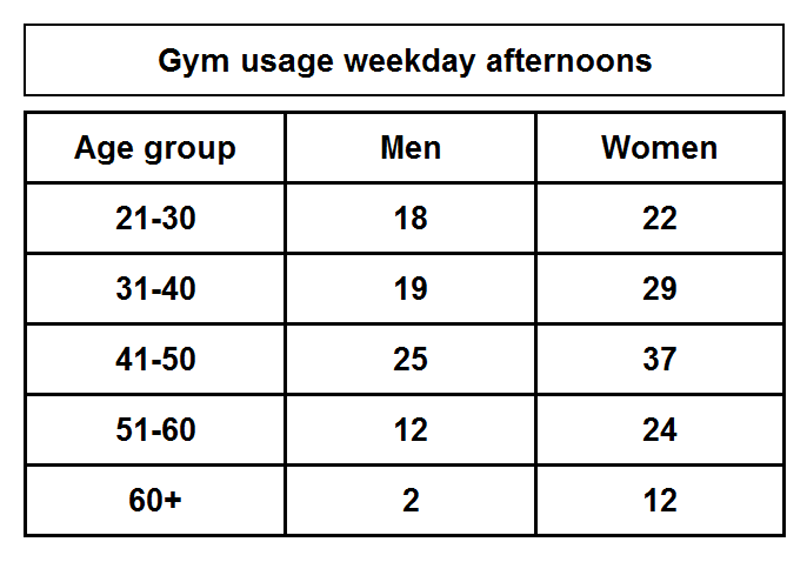
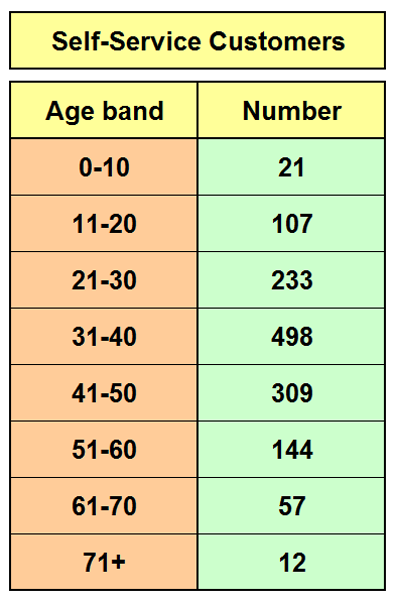
Once collected, numerical data can be grouped into bands. Although some accuracy is lost, it makes the data easier to handle and interpret. Here a supermarket has surveyed customers passing through the self-service checkouts.
Diagram
Method
Learn all the definitions above. Record and read data carefully.
Example
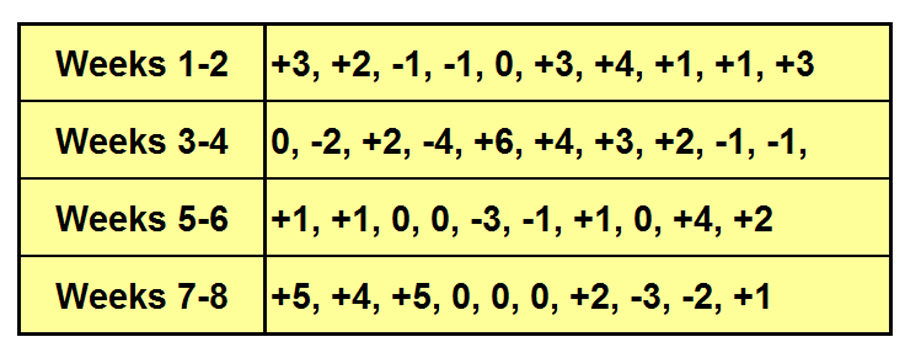
Glenn is certain his bus is late every morning so he decides to monitor it for 8 weeks. He records how late/early/on time it is each morning. Here is his raw data (+ means late, - means early. 0 indicates the bus was on time)
Diagram
Note
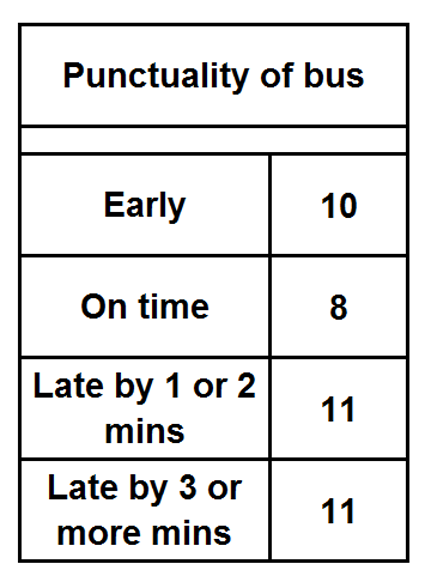
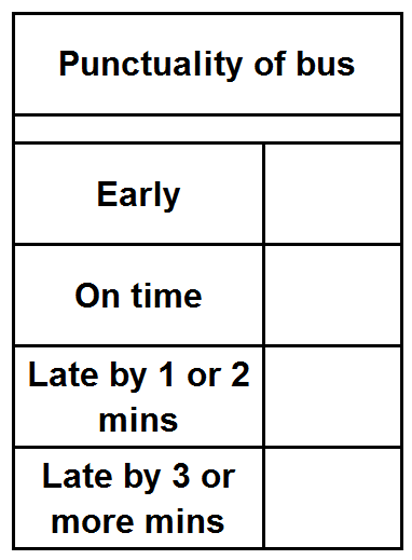
He decides to convert the raw data into a grouped frequency table. Fill in the frequency table.
Diagram
Solution
Count the number in each of the groups. Your table should look like this.
Diagram