

G GCSE Apps

GCSE Geometry

Angles

9 subtopics in this section

Angles basics

Definition

There are a number of Basic Rules governing Angles. You need to know them all.

Diagram
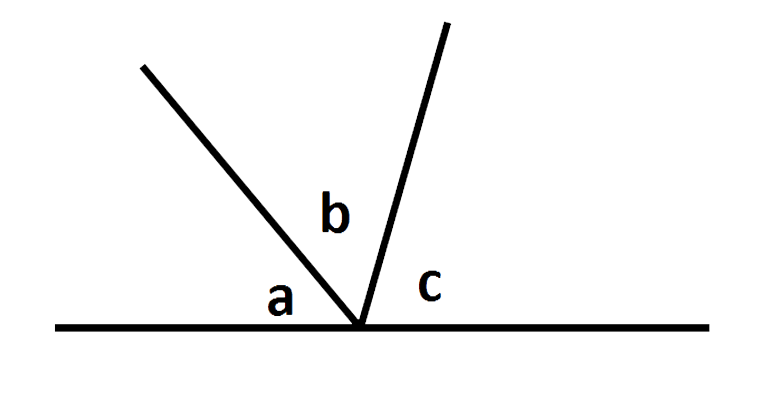
angles on a straight line

Note

Angles on a straight line add up to 180° a + b + c = 180°

Diagram
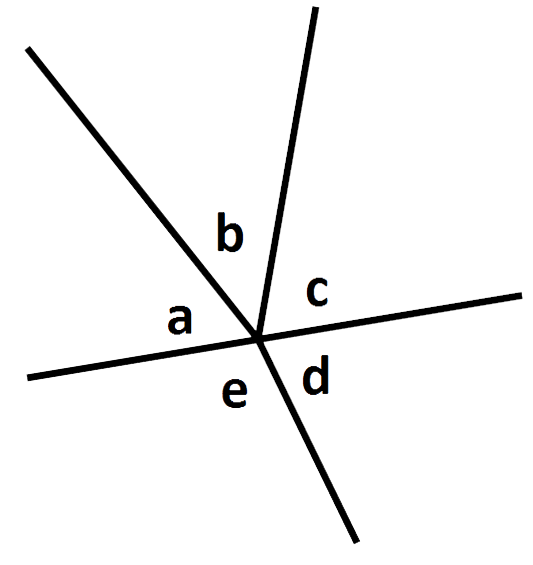
angles around a point

Note

Angles around a point add up to 360° a + b + c + d + e = 360°

Diagram
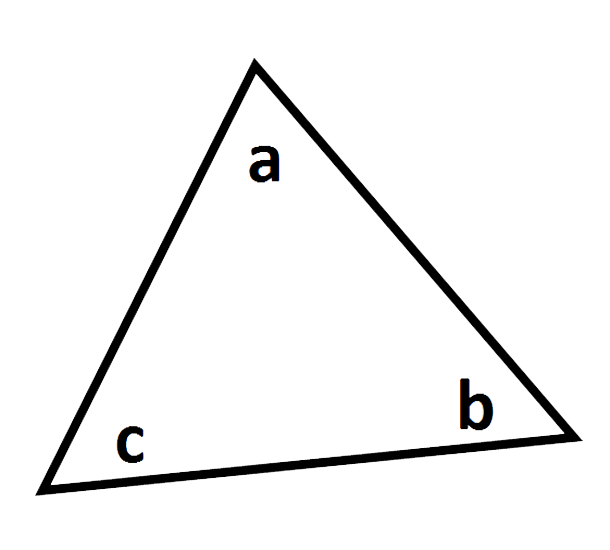
angles in a triangle

Note

Angles in a triangle add up to 180° a + b + c = 180°

Diagram
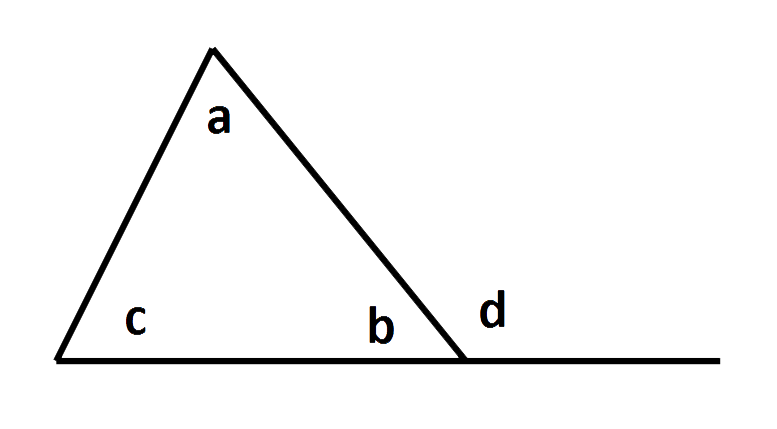
exterior angle of a triangle

Note

Exterior Angle of a Triangle = Sum of Opposite Interior Angles d = a + c

Diagram
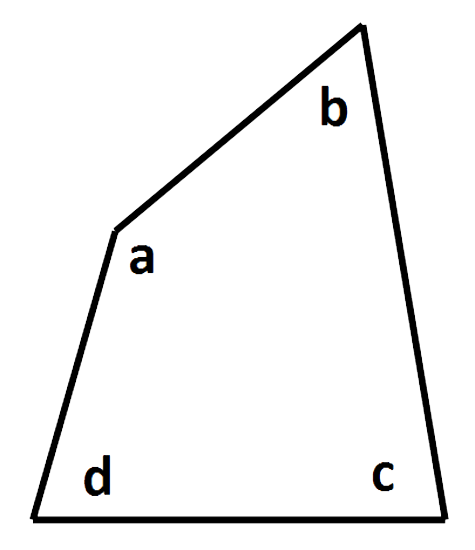
angles in a quadrilateral

Note

Angles in a quadrilateral add up to 360° a + b + c + d = 360°

Method

Learn all the facts above.

Example

Three angles in a quadrilateral are 70°, 120° and 84°. What is the fourth angle?

Solution

The sum of the angles of a quadrilateral is 360° so the missing angle is: 360° - (70° + 120° + 84°) = 86°
Angles in a triangle

Definition

The sum of the angles in a triangle is 180°

Diagram

angles in a triangle

Note

a + b + c = 180°

Diagram

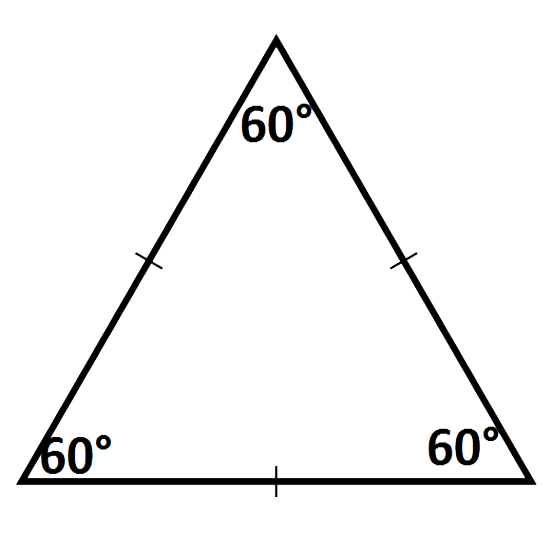
angles in an equilateral triangle

Note

In an equilateral triangle, all the angles are 60°

Diagram

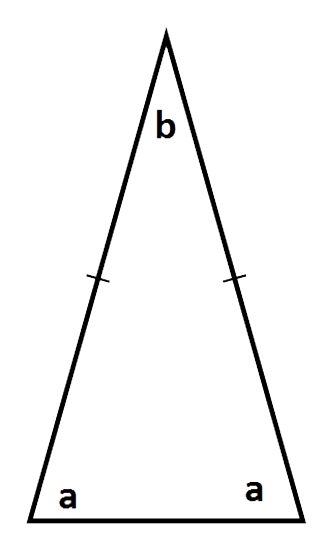
angles in an isosceles triangle

Note

The angles between each equal side and the unequal side in an isosceles triangle are the same.

Tips/hints

You only need to know one angle in an isosceles triangle to be able to work out the other two.

Example

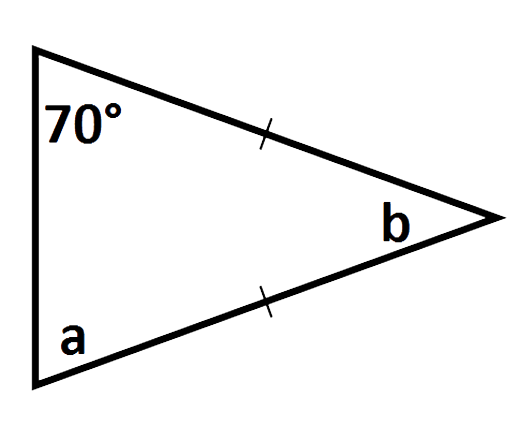
Find a, b in the diagram.

Diagram

isos triangle ex

Solution

The angles between each equal side and the unequal side in an isosceles triangle are the same. So, a = 70° The angles in a triangle add up to 180° So, b = 180° - (70° + 70°) = 40°

Opposite angles

Definition

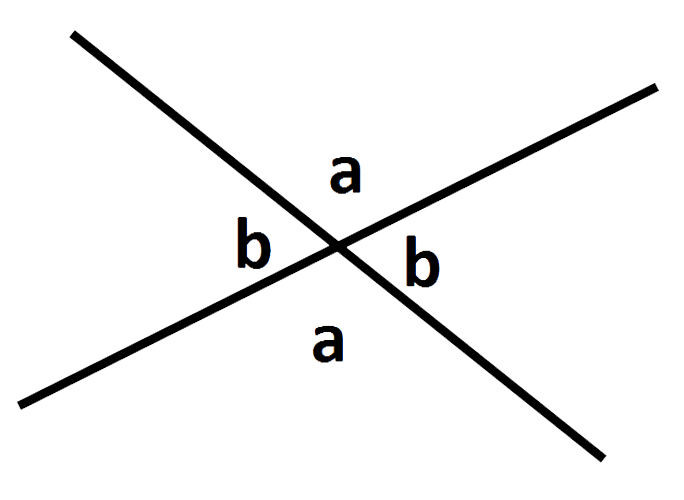
If two lines intersect, then the Opposite Angles are Equal

Diagram

opposite angles

Method

Learn the diagram

Example

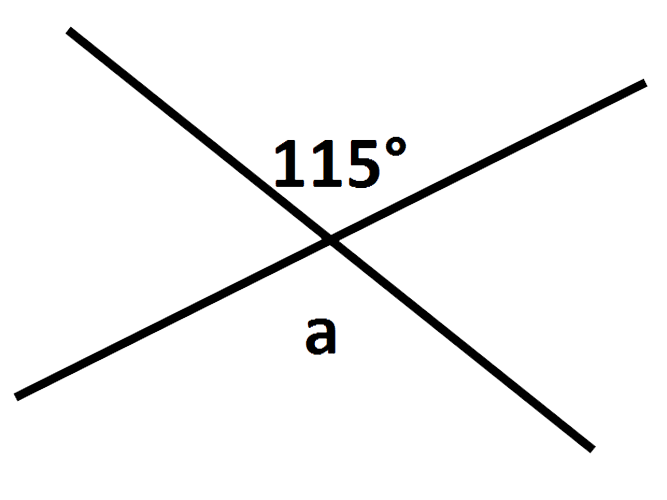
What is the size of angle a?

Diagram

opposite angles ex

Solution

It's opposite 115° so it's equal to 115°

Angles around a point

Definition

Angles around a point add up to 360°

Diagram

angles around a point

Note

a + b + c + d + e = 360°

Method

No matter how many angles there are around the point, they add up to 360°

Example

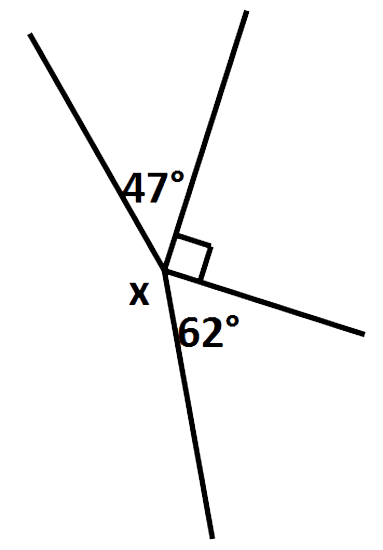
What is the size of x in the diagram?

Diagram

angles around a point ex

Solution

Angles around a point add up to 360° So, x = 360° - (47° + 90° + 62°) = 161°

Interior angles

Definition

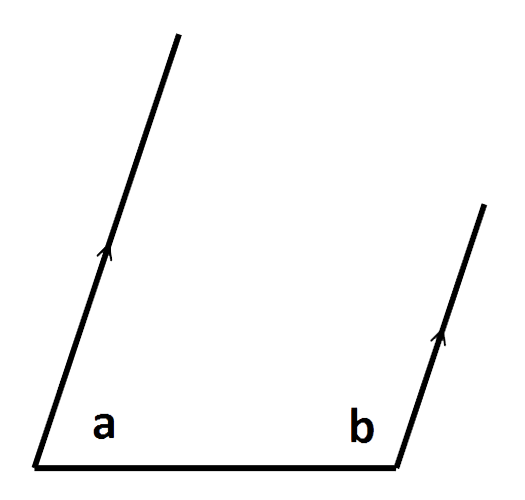
The Interior Angles between a pair of parallel lines are Supplementary ie. they add up to 180°

Diagram

interior angles

Note

Note that the Interior Angles have to be on the same side of the line joining the parallel lines.

Tips/hints

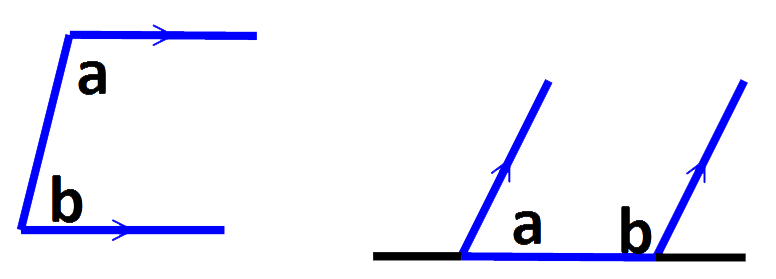
Look for the C or U shape to spot interior angles.

Diagram

interior angles C and U

Example

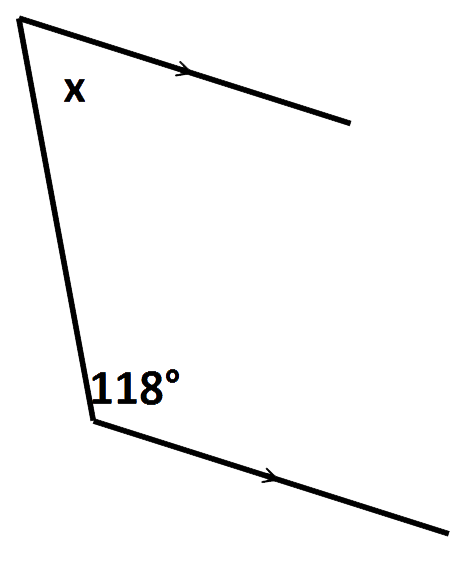
What is the size of x in the diagram below?

Diagram

interior angles ex

Solution

The lines are parallel so x and 118° are interior angles (do you see the C shape?) So, x = 180° - 118° = 62°

Alternate angles

Definition

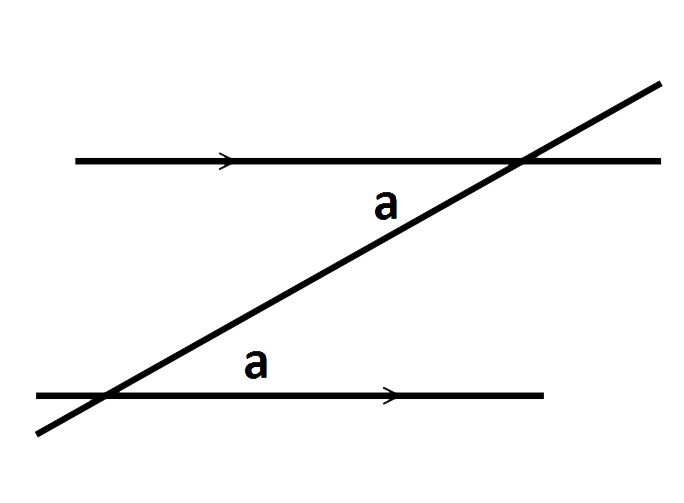
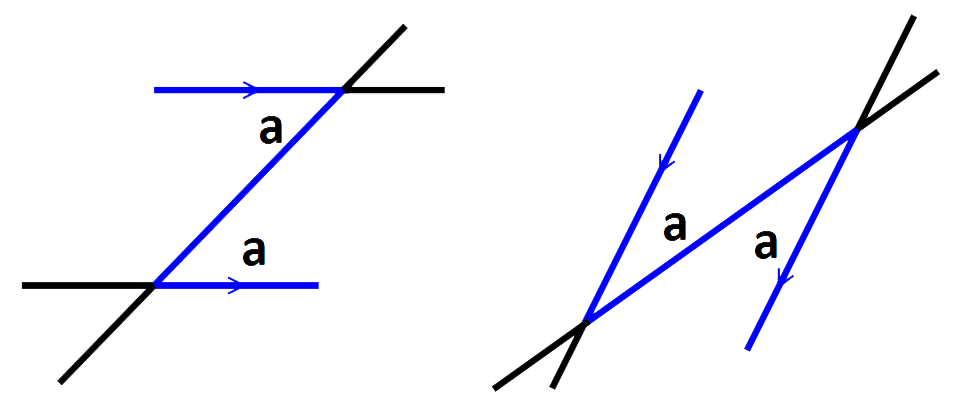
Alternate Angles lie within parallel lines on opposite sides of the transversal that crosses the line. They are equal

Diagram

alternate angles

Tips/hints

Look for the Z shape.

Diagram

alternate angles Z

Example

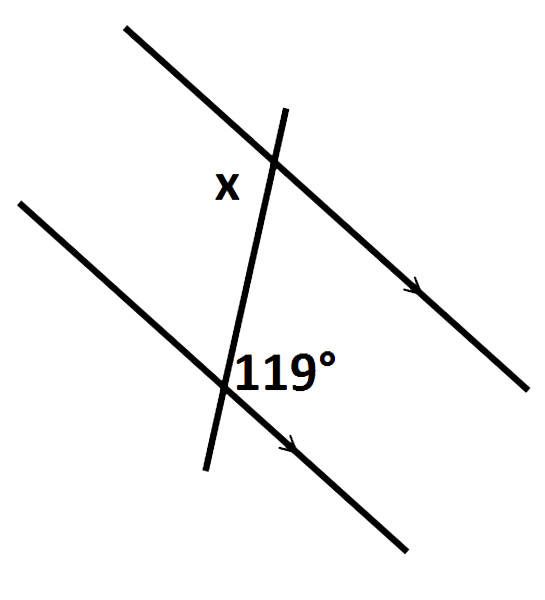
What is the size of x in the diagram below?

Diagram

alternate angles ex

Solution

x is alternate to the angle that's 119° so, x = 119°

Corresponding angles

Definition

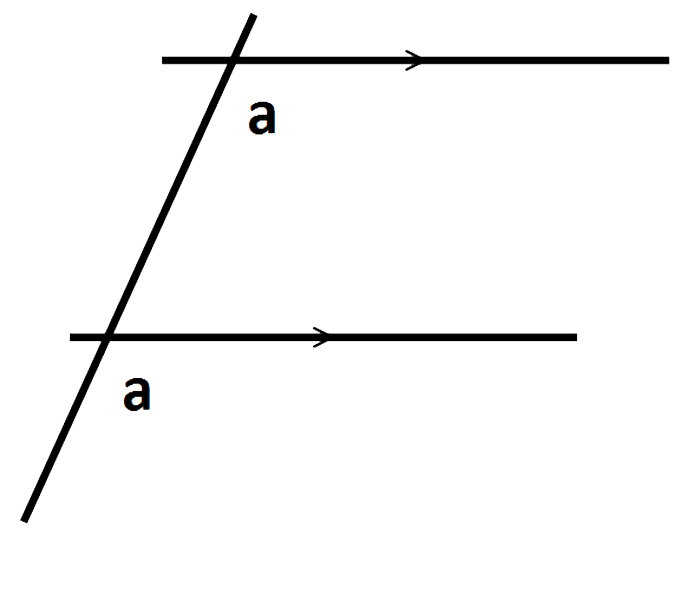
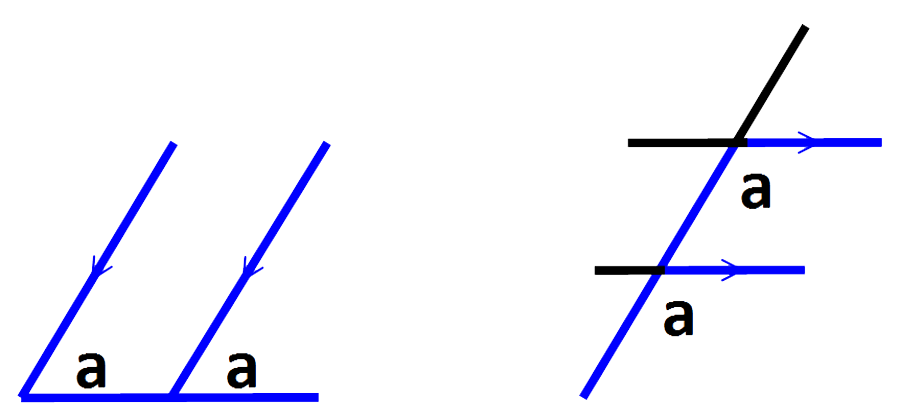
Corresponding Angles lie in the same relative position between parallel lines and the transversal crossing them. They are equal.

Diagram

corresponding angles

Tips/hints

Look for the F shape

Diagram

corresponding angles F

Example

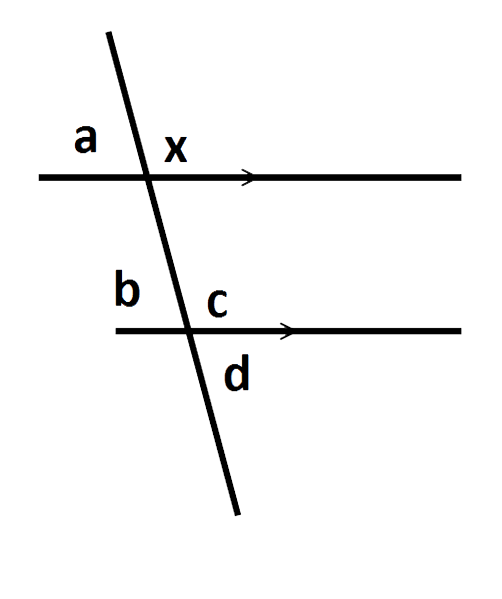
Which angle 'corresponds' to x and so is equal?

Diagram

corresponding angles ex

Solution

In this example, the F shape is upside down. x and c 'correspond' because they lie in the same relative position regarding their parallel lines and the transversal. So, x = c

Angles in a quadrilateral

Definition

Angles in a quadrilateral add up to 360°

Diagram

angles in a quadrilateral

Note

a + b + c + d = 360°

Tips/hints

Look out for special quadrilaterals, especially those which have one or more pairs of parallel sides.

Example

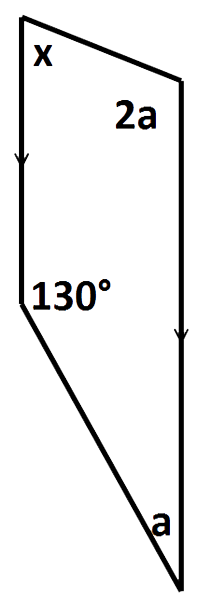
What's the size of x in the quadrilateral below?

Diagram

angles in a quadrilateral ex

Solution

The quadrilateral is a trapezium because it has one pair of parallel sides.

By Interior Angles, (a + 130°) = 180° So a = 50° And 2a = 100°

Again by Interior Angles, (x + 100°) = 180° so, x = 80°

Angles and regular polygons

Definition

A Regular Polygon is a Polygon with equal sides, equal interior angles and equal exterior angles.

For any regular polygon: Exterior Angle = 360° ÷ (number of sides) Interior Angle = 180° - Exterior Angle

Proof

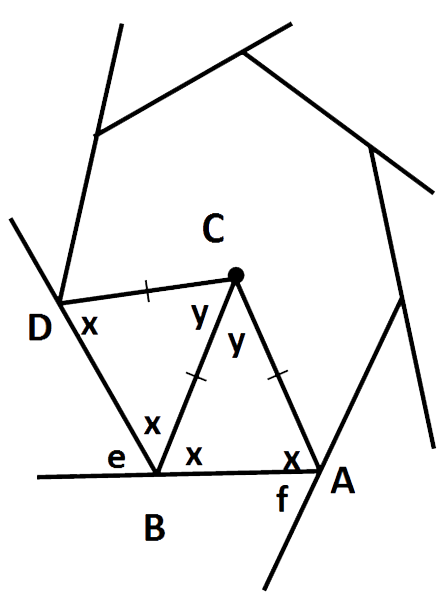
Let x be the exterior angle of a regular polygon (a heptagon is shown but the same proof applies to any regular polygon).

Diagram

regular heptagon with exterior angles

Note

Because it's a regular polygon, DB = BA, and CD = CB = CA (where C is the centre of the polygon). So, triangles BCD and ACB are identical and are isosceles with equal angles x.

Now, the exterior angle of a triangle = the sum of the opposite interior angles so, for triangle ABC, (e+x) = (x+y) So, e = y

Let N be the number of sides of the polygon. At the centre, Ny = 360° And there are N exterior angles, so Exterior Angle = 360°/N

And, as angles on a straight line add up to 180°, each Interior Angle = 180° - Exterior Angle

Method

Remember the formula for the Exterior and Interior Angles of a Regular Polygon and don't get them muddled up.

Example

A Regular Polygon has internal angles that are 157.5°. How many sides does it have?

Solution

Interior Angle = 180° - Exterior Angle So, Exterior Angle = 180° - 157.5° = 22.5° Now, for a regular polygon, Exterior Angle = 360° ÷ (number of sides) So, (number of sides) = 360° ÷ Exterior Angle = 360° ÷ 22.5° = 16

Test yourself on this topic

Try the free quiz with worked solutions.

Start quiz →

Get GCSE Geometry

Full notes, full question bank, offline.